0800 270 7077

Garden Strategies to Restore and Revitalize Your Garden

Landscaped garden with natural pond surrounded with rocks and gravel.

Restoring a neglected or tired garden requires thoughtful planning. Whether your garden has suffered from overgrowth, general neglect, or environmental stress, a combination of soil care, plant selection, pruning, and sustainable practices can help rejuvenate the space.

Here are the key strategies you should adopt to restore and revitalise your garden:

Assess the Garden’s Condition
Before diving into restoration, take the time to assess the current health of your garden and to identify issues:

  • Check soil health: Test the soil for nutrient deficiencies, pH levels, and drainage issues. Healthy soil is the foundation of a thriving garden, so understanding its condition will guide your next steps.
  • Identify problem areas: Note areas with overgrown plants, weeds, compacted soil, or poor sunlight. This will help you to focus on the areas that need the most attention.
  • Evaluate plant health: Check for dead, diseased, or dying plants. Decide whether to prune, replace, or remove plants based on their condition.

Enhance Garden Design and Layout
Consider redesigning the layout of your garden to improve aesthetics, sustainability and ease of maintenance:

  • Create zones: Group plants with similar water, light, and soil needs into zones to simplify maintenance. Consider creating a vegetable garden, pollinator garden, or herb garden based on specific themes.
  • Incorporate hardscaping: Adding pathways, raised beds, or garden borders can help structure the space and your access to it, making it easier to maintain. Use sustainable materials like reclaimed wood or natural stone for hardscaping.
  • Add water features: Ponds, birdbaths and fountains can enhance the garden’s natural beauty and attract wildlife, contributing to the health of the garden’s ecosystem.

Improve Soil Quality
Healthy soil is crucial for plant growth. If the soil is depleted, eroded, or compacted, follow these steps to restore it:

  • Improve the soil: Add organic matter such as compost, well-rotted manure, or leaves to improve soil structure, increase moisture retention, and replenish nutrients.
  • Aerate the soil: If the soil is compacted, aerating it can improve oxygen flow and root penetration. Use a garden fork or mechanical aerator to break up compacted areas.
  • Mulch: Applying a layer of organic mulch (such as straw, bark chips, or shredded leaves) helps moisture retention and temperature regulation while also preventing weed growth.

Weed and Clear Debris
Weeds can choke out desired plants and steal nutrients. They can also ruin the look of your space. To restore order and improve plant growth:

  • Remove weeds: Pull out weeds by hand or use a hoe to remove them at the root. Avoid using chemical weed killers, which can harm beneficial plants and soil organisms.
  • Clear debris: Remove fallen branches, dead leaves, and other garden debris to improve the garden’s appearance and reduce the risk of disease.
  • Suppress future weeds: Once cleared, apply mulch to prevent new weeds from appearing and use weed barriers or landscape fabric for long-term control.

Pruning and Trimming
Proper pruning not only improves the appearance of your plants but also encourages healthy growth:
  • Prune overgrown plants: Trim back overgrown shrubs, trees, and perennials to reshape them and allow for better air circulation and light penetration.
  • Remove dead and diseased branches: Prune dead or damaged branches to promote new growth and reduce the spread of diseases.
  • Cut back perennials: Many perennials benefit from being cut back after flowering, which encourages a second bloom or stronger growth next season.
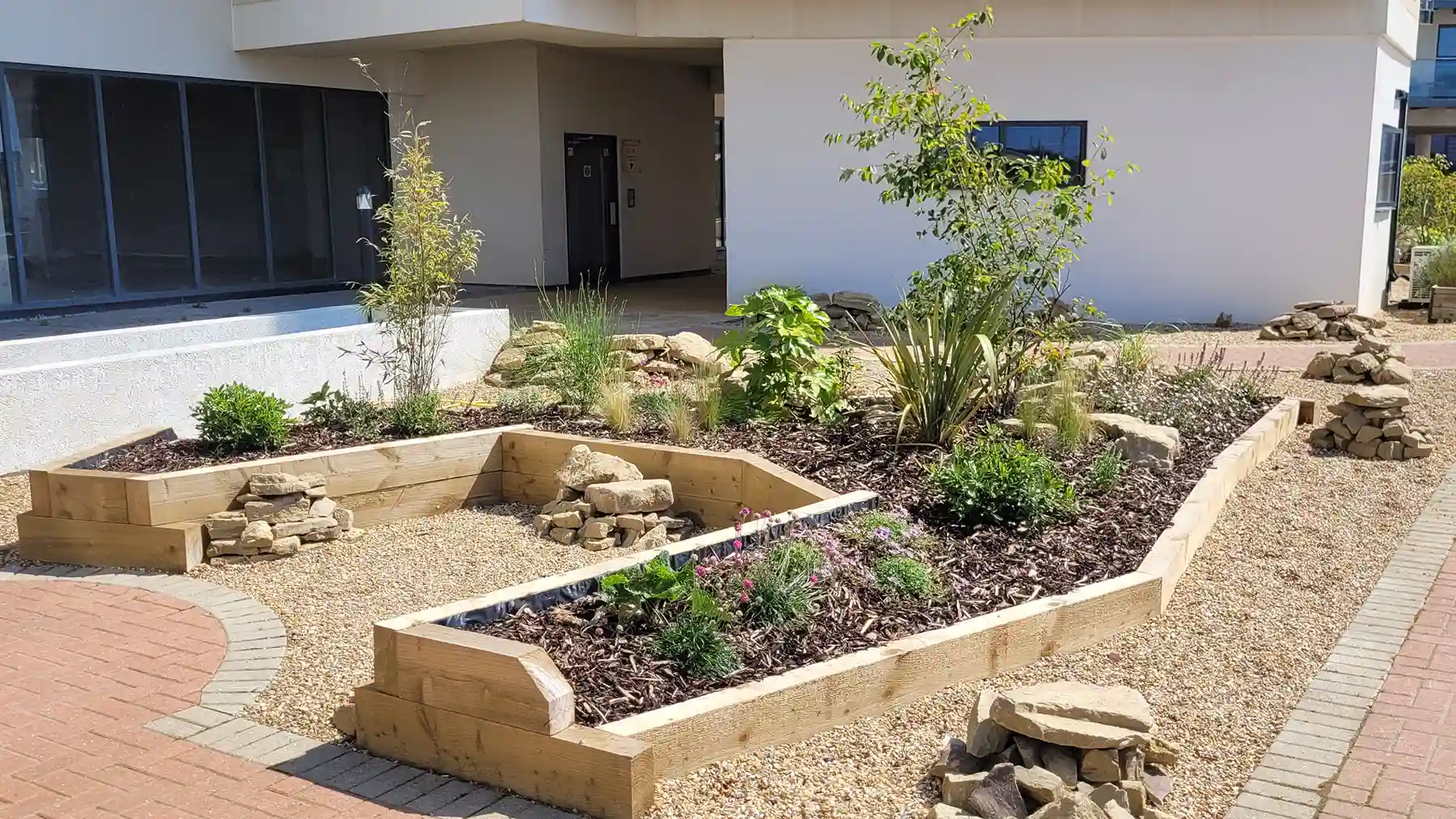
Angled raised sleeper flower bed surrounded with clusters of rocks and shingle.

Replant or Add New Plants
If certain areas of the garden look bare, uninteresting or unproductive, consider adding new plants to restore balance:

  • Choose native plants: Native species are often more resilient to local weather conditions and pests, making them easier to maintain. They also support local wildlife and biodiversity.
  • Mix perennials and annuals: To maintain continuous growth and colour throughout the year, balance short-lived annuals with longer-lasting perennials.
  • Feature flowers and foliage: Include both flowering plants and those notable for their attractive foliage when evolving your planting scheme. This will lend interest to your space throughout the year.
  • Plant appropriately: position specimens based on their sunlight, water, and soil requirements. Plants will only thrive when positioned according to their needs.

Fertilize Wisely
Plants need nutrients to thrive, but over-fertilizing can harm both plants and the environment:

  • Use organic fertilizers: Choose compost, worm castings, or organic fertilizers that provide a slow release of nutrients, improving soil health and plant growth without the harsh chemicals of synthetic fertilizers.
  • Feed according to plant needs: Different plants require varying nutrient levels, so use fertilizers tailored to specific plants if you can, otherwise choose general-purpose fertilizers with balanced nutrients.

Control Pests Naturally
Restoring your garden to health involves managing pests in an eco-friendly way:

  • Introduce beneficial insects: Encourage natural predators like ladybugs, lacewings, and predatory beetles, which feed on common garden pests such as aphids and mites.
  • Use natural pest deterrents: Apply organic pest repellents like neem oil or insecticidal soap to combat pests without harming beneficial insects or the environment.
  • Plant companion crops: Companion planting can help reduce pest populations. For example, planting marigolds near vegetables can deter aphids and nematodes.

Encourage Wildlife and Pollinators
Attracting beneficial wildlife is essential for a balanced, healthy garden ecosystem:

  • Plant pollinator-friendly species: Include nectar-rich flowers, such as lavender, echinacea, or sunflowers, to attract bees, butterflies, and hummingbirds.
  • Create habitats: Provide shelter for birds, insects, and small animals by adding birdhouses, insect hotels, or dense shrubs where wildlife can nest and thrive.
  • Avoid harmful chemicals: Use organic and chemical-free gardening practices to protect wildlife and maintain a balanced ecosystem.

Practice Patience and Persistence
Restoring a garden takes time, especially if it has been neglected or damaged:

  • Work in instalments: Restoring an overgrown or out of control garden takes time. It probably won’t be possible to sort everything out in one go. Establish an order of priorities and tackle the required work in stages and as time permits.
  • Be patient: Some plants may take a season or two to fully recover or to establish themselves. Avoid the urge to over-fertilize or over-water to speed up the process.
  • Observe and adjust: Monitor the progress of your garden over time. Regularly inspect plants for pests, signs of disease, or nutrient deficiencies, and adjust your care routines.

Hard Work but Worth the Effort
Restoring a garden requires a combination of care, thoughtful planning, and sustainable practices. There is no doubt that a restoration project will be hard work. But by improving soil health, selecting the right plants, controlling pests naturally, and encouraging biodiversity, you can transform a tired garden into a thriving, eco-friendly space. With patience and persistence, your garden will flourish and provide lasting beauty and enjoyment for years to come.